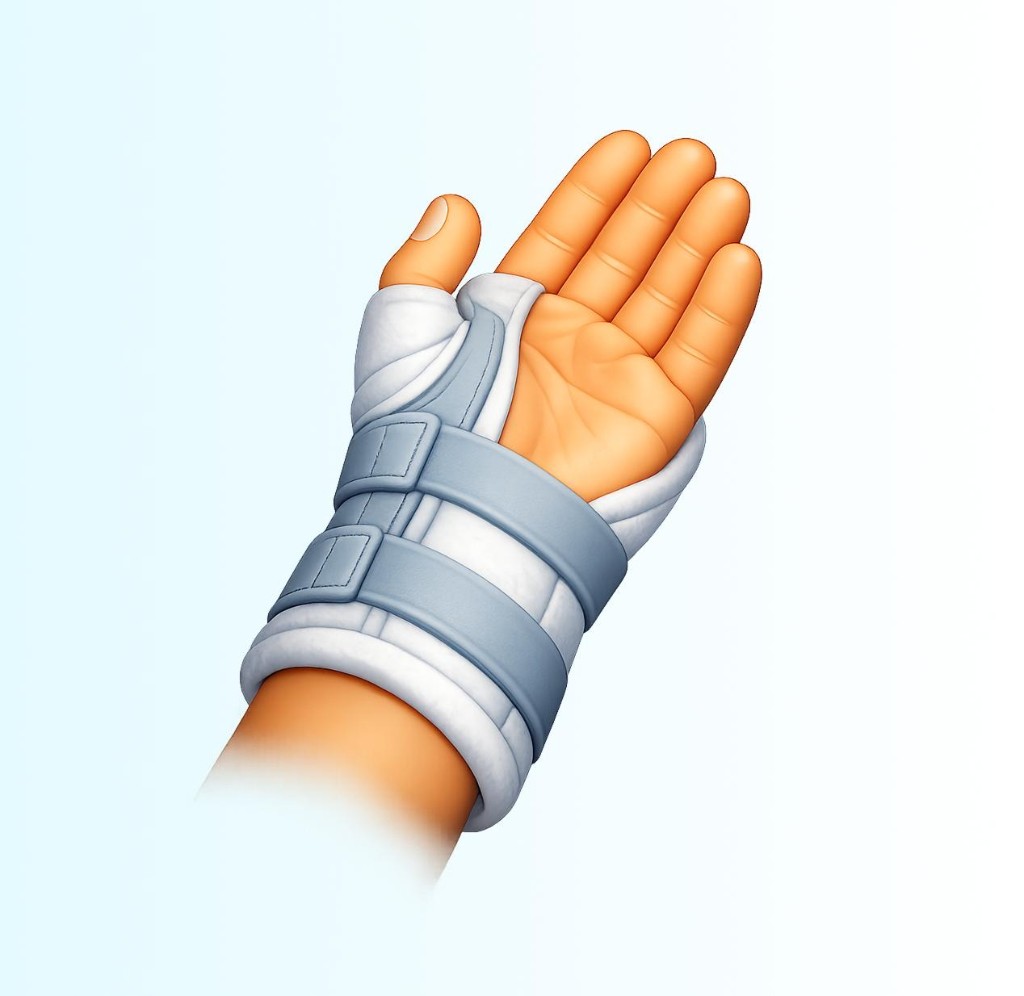
Straight fist
FDS-isolated flexion (MCP + PIP flexion, DIP extension)
Related demo: Tendon glides
ReelsGoal
Selectively glides FDS; complements hook and full fist in the tendon-glide ladder.
Motion taxonomy (reference)
Motion types: flexion · glide
Also called: intrinsic plus flexion · knuckle bend · mcp flexion ip extension
Muscles — extensor digitorum, flexor digitorum superficialis, interossei, lumbricals
Tendons — extensor hood, FDS tendons, flexor tendons
Bones / joints — DIP joints, MCP joints, metacarpals, phalanges, PIP joints
Indexed benefits: helps joint coordination · improves finger coordination · improves MCP control · isolates FDS glide · maintains intrinsic balance · supports tendon glide
Common contexts: arthritis mobility · finger stiffness · lumbrical activation · tendon glide · tendon glides
Best for
- Isolated FDS glide
- Selective tendon mobilization
Default dose
10 reps • 3×/day
Avoid when
- Repaired FDS tendon without protocol clearance
Measurement targets
- PIP active flexion (degrees)
Stop if you feel
Stop rules
- Sharp pain (≥ 4/10)
- Increasing swelling during or after
- New or worsening numbness or tingling
- Color change in fingers (pale, blue, red)
- Wound opens, drains, or feels hot
- Next morning is worse than the day before
Used in
Search the exercise library with this motion's clinical label for additional guided drills that may match your plan.
What to do next — not a dead end
Suggestions use body region, goal, motion type, and allowed phases — not your medical record. After surgery or a flare, follow your clinician first.
~2–5 min as a focused practice block
10 reps · 3×/day
None required — table or bodyweight only.
Phases 2, 3
Higher load or coordination — scale range and speed.
Avoid if this sounds like you
Repaired FDS tendon without protocol clearance
Reread best-for context ↑Where this shows up clinically
How phases map to healingNext best movements
Later phase or richer progression when you are ready.
Prerequisite / gentler lane
Same region and intent — usually earlier phase or lower risk.
Commonly paired with
Different primary goal, same region — typical mixed sessions.
Related movements
Similar mechanics, goals, or anatomy.
- DIP blockingtendon-glide · moderate risk
- PIP blockingtendon-glide · moderate risk
- Hook fisttendon-glide
- Full fisttendon-glide · moderate risk
- Tendon glide sequencetendon-glide
- Differential tendon glidetendon-glide · moderate risk
- Thumb IP blockingtendon-glide · moderate risk
- Thumb tip bendtendon-glide · moderate risk
Keep momentum without overdoing it
Log a short check-in to protect your streak — even one quality set counts.