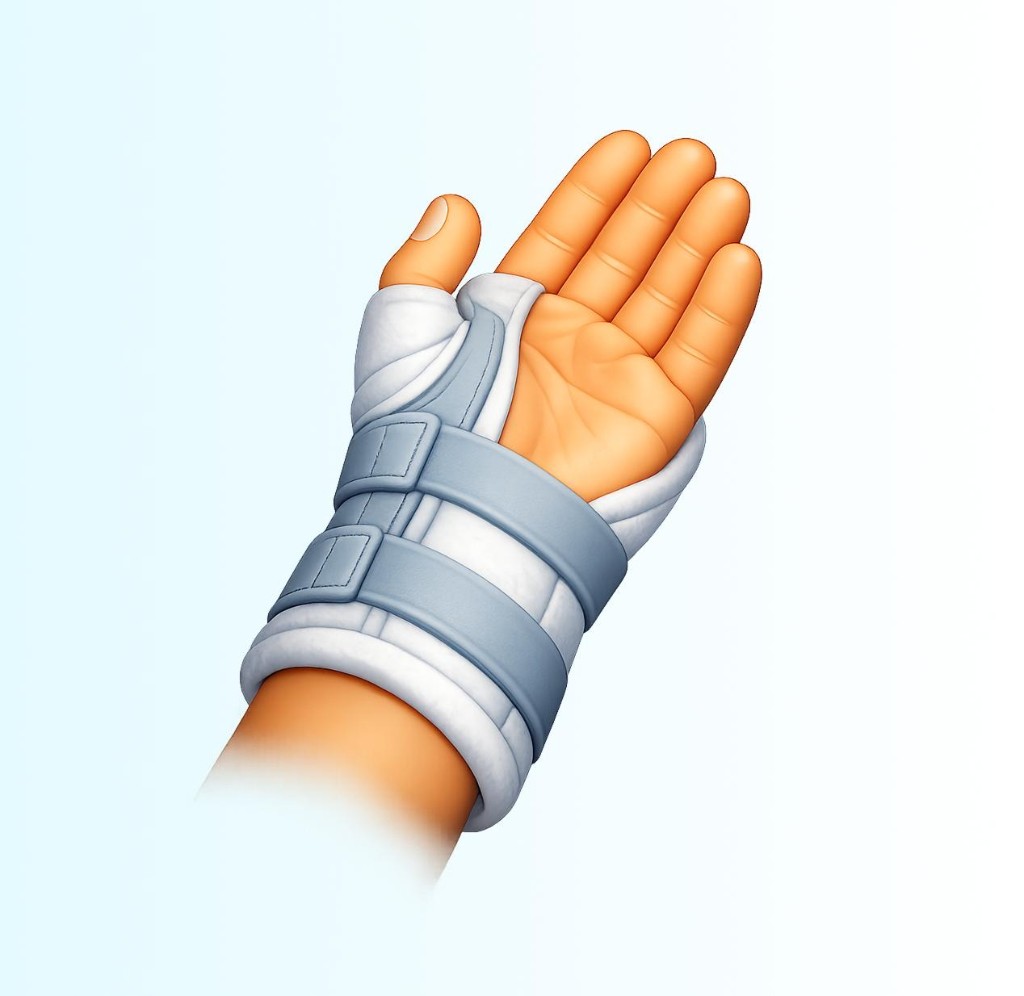
Do this exercise
2 sets × 8 reps. Watch the demo and tap through at your own pace — we log your reps, holds, and how it felt.
Prefer the classic step-by-step timer?
Start midway — elbow quiet.
Ready when you are
We'll guide you through 5 short steps — about 26 seconds of guided motion. Pause or stop anytime — nothing is uploaded.
Have ready: Stick, dowel, or pen (rotation aid)
Contraindications & stop if…
When not to do this
- Recent elbow fracture or surgery without clearance
- Instability that feels like the joint slips
Stop if
- Sharp elbow pain
- Clicking with catching
- New numbness in ring or small finger
Prefer a quick pacing gate before the timer? Use full guided session — it asks for pain, stiffness, and fatigue in a few taps first (education only, not clearance).
Why it helps
Pronation and supination restore the rotation you use for pouring, typing posture changes, and opening doors — without loading grip.
What it should feel like
A gentle twist in the forearm. No sharp pinching at the elbow.
Target area
Forearm, wrist
Stop if you notice
- Sharp elbow pain
- Clicking with catching
- New numbness in ring or small finger
Get clearance first if
- Recent elbow fracture or surgery without clearance
- Instability that feels like the joint slips
Instructions, dose & tipsSetup, how many to do, and common mistakes
How to do it well
Goal, setup, dose, and the things therapists most often have to repeat. This is education — not a replacement for your clinician's plan.
Before you start
- Keep the upper arm against your ribs so the twist comes from the forearm.
- If the elbow pinches, shrink the range by half.
- Optional: hold a thin pen, chopstick, or dowel across the palm like a small steering wheel — it can make the rotation axis easier to feel.
Today's dose
- Reps
- 8
- Sets
- 2
- Sessions / day
- 3
- Rest
- 30s
- Pain ceiling
- 3/10
Common mistakes
- Shrugging the shoulder to cheat extra rotation
- Letting the wrist cock sideways to fake more turn
- Holding the breath through the arc
Easier version
- Use the other hand to lightly guide only the last few degrees
- Reduce to 5 reps
Harder version
Only if your phase allows progression.
- Add a 3-second hold at end pronation and supination
How did this feel?
One tap. Saved as a question for your next visit when relevant — never auto-shared.